


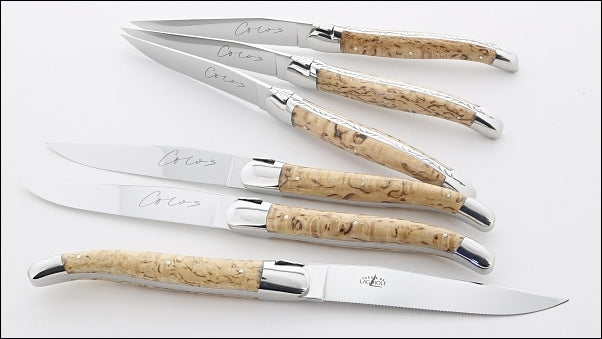

How to Recognize a Good Laguiole Pocket Knife
First and foremost, it is important to be aware that Laguiole knives (sometimes called "bee knives") are not made by a single manufacturer. It is not a brand, but rather the name of a small village in the department of Aveyron, France, where this style of cutlery was created.
Because the name was never trademarked, it is in the public domain. Anyone can label cutlery as "Laguiole," regardless of where it is made or if it follows the original design. As of 2024, no regulations govern the name, which explains why low-quality versions appear in big-box stores at low prices.
At Laguiole Imports, we do not endorse mass-produced knives from Asia or factory-line French versions. All knives on our site are meticulously handcrafted to keep 200-year-old traditions alive.
Should I purchase a knife with a pressed horn handle?
Avoid purchasing a Laguiole pocket knife with a pressed horn handle. Ensure the material is Horn Tip, not pressed horn, regardless of where you buy.
Why is this crucial?
Only the last 4 or 5 inches of a horn are solid. The rest is hollow. To use the hollow part, it must be steamed and compressed (pressed). Because horn has "shape memory," it will eventually try to revert to its original shape, causing gaps and warping. Pressed horn is inexpensive and common in low-quality knives.
Why are handles made from Horn Tip a better choice?
The tip is the toughest, densest part of the horn. It is processed by cutting small bars and attaching them directly to the handle without heat treatment. Only two knives can be crafted from a single horn tip.
Esteemed cutlers like Forge de Laguiole and Fontenille Pataud do not use pressed horn. They prioritize excellence over inferior materials.
Can you return a knife bought in France?
While possible, you may have to cover return shipping ($20-$50 USD). Buying in France does not guarantee high quality; many French websites sell mass-produced items from China or India labeled with a "bee." For more information, read our guide: Should You Purchase Laguiole Cutlery Directly from France?
Laguiole Imports only offers knives 100% made in France and provides a 30-day "no questions asked" return policy on non-engraved goods.
Should the knife be inscribed with "France"?
In the U.S. and Canada, customs require the country of origin ("France" or "Made in France") to be inscribed on the knife to prevent misrepresentation. All Forge de Laguiole items sold by U.S. retailers are discreetly engraved with "France." If a U.S. retailer sells a knife without this marking, contact them for an explanation.
Ask questions to the retailer
Be cautious of websites with hidden contact information. A reputable retailer should be easy to reach. If you have doubts about a product's origin, email us at support@laguiole-imports.com or call 888-899-1172.
Look for the maker's mark: A quality knife will feature the cutler's logo or name on the blade. Lack of identifying information usually indicates poor quality.
Forged Blades: What’s the catch?
Some brands use the term "Acier Forge" to refer only to the bolsters, while the blade itself is actually stamped from sheet metal. While high-quality stamped stainless steel (12c27) is suitable for many, forged blades are superior and more expensive to produce.
Forge de Laguiole is the only manufacturer that forges all blades in-house in the village of Laguiole. You can learn more about the technical differences in our detailed guide on forged blades.
Technical Signs of Quality
To identify a well-made knife, check the following:
- Weight and Feel: It should feel solid in the hand with no plastic parts.
- Alignment: The blade should be perfectly perpendicular to the spring when open.
- Mechanism: The blade should close smoothly without knocking against the base of the spring.
- Fit and Finish: There should be no gaps between the handle plates and the metal bolsters.
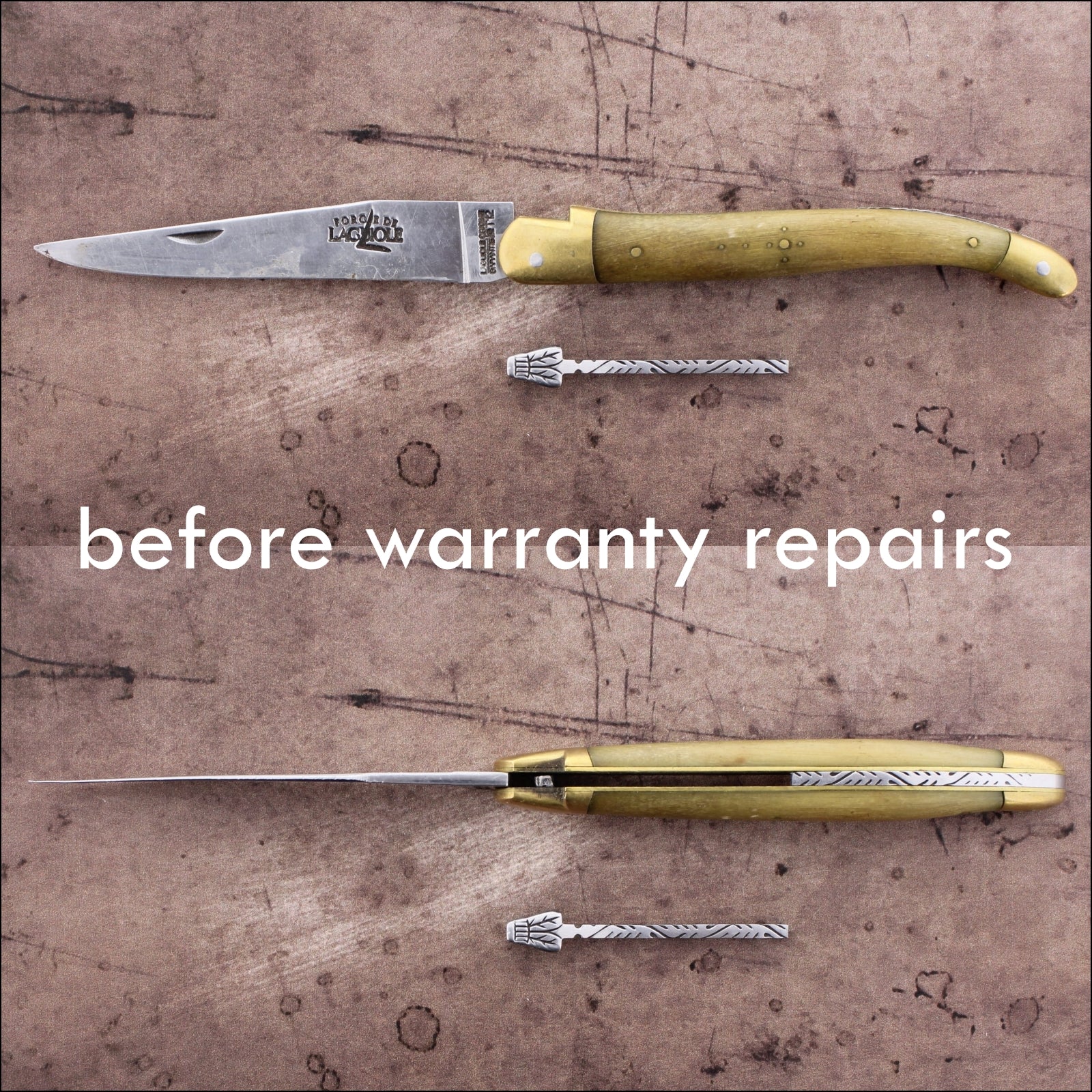
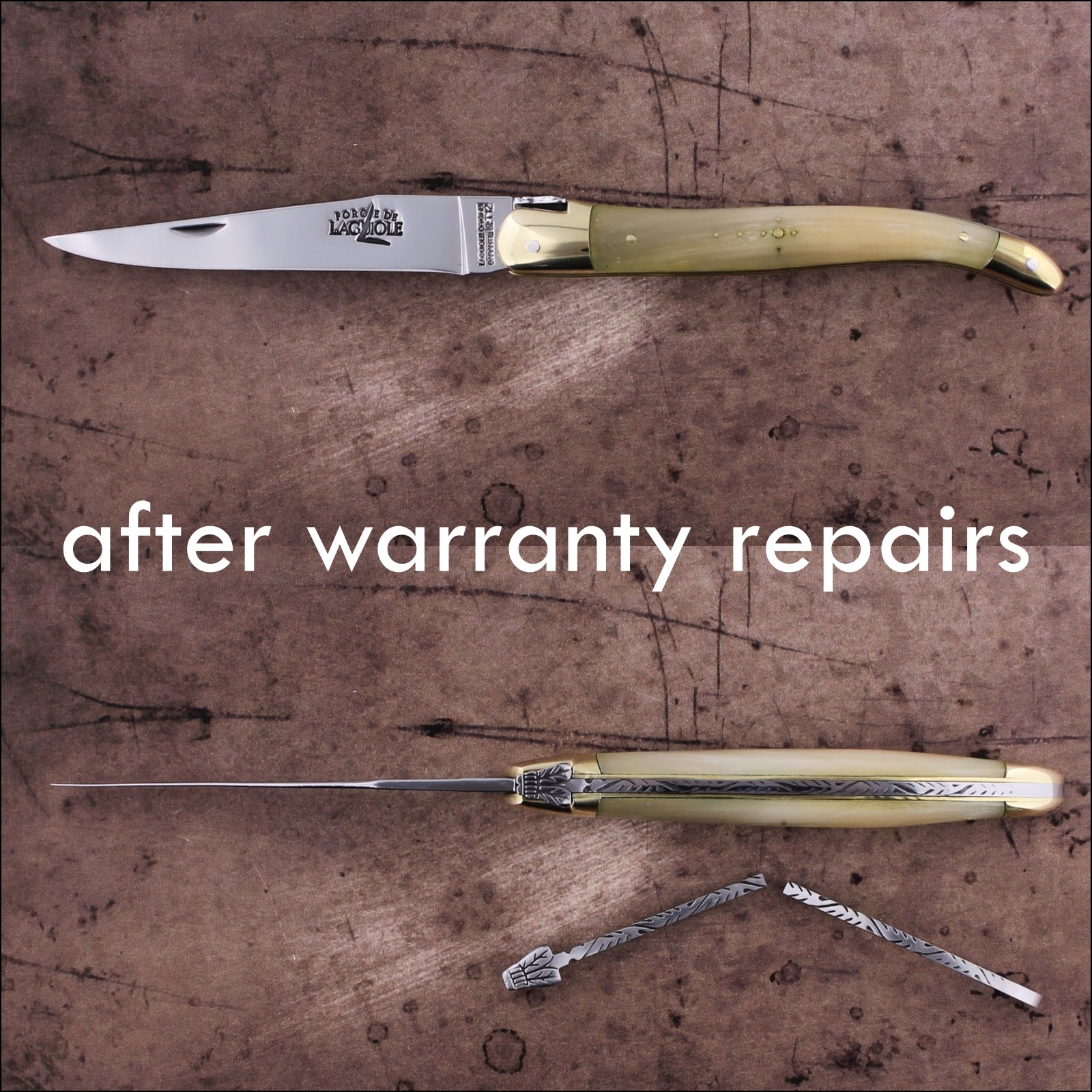
- Hand-chiseled details: Small irregularities in the spring decoration are a good sign of handwork.
One Craftsperson, One Knife
Top manufacturers follow the "one person, one knife" rule. While the artisan doesn't forge the raw steel themselves, they are responsible for the assembly, shaping, and finishing of the entire knife from start to finish.
What is a "Forged Bee & Spring"?
On high-end knives, the bee and the spring are forged from a single piece of metal (no visible gap). Inexpensive models use a "soldered bee," in which the bee is welded to the spring, creating a visible straight line where the two pieces meet.