

 $72.00 CAD
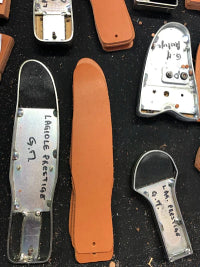
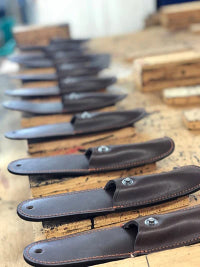
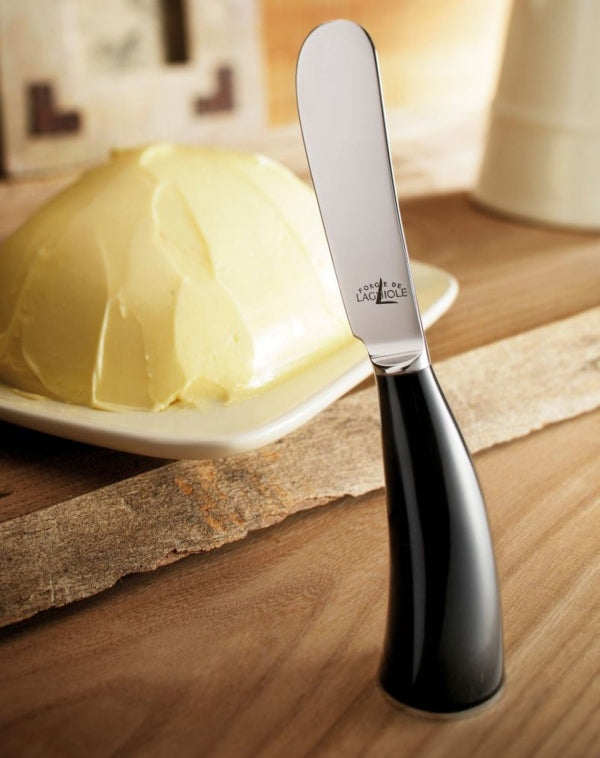
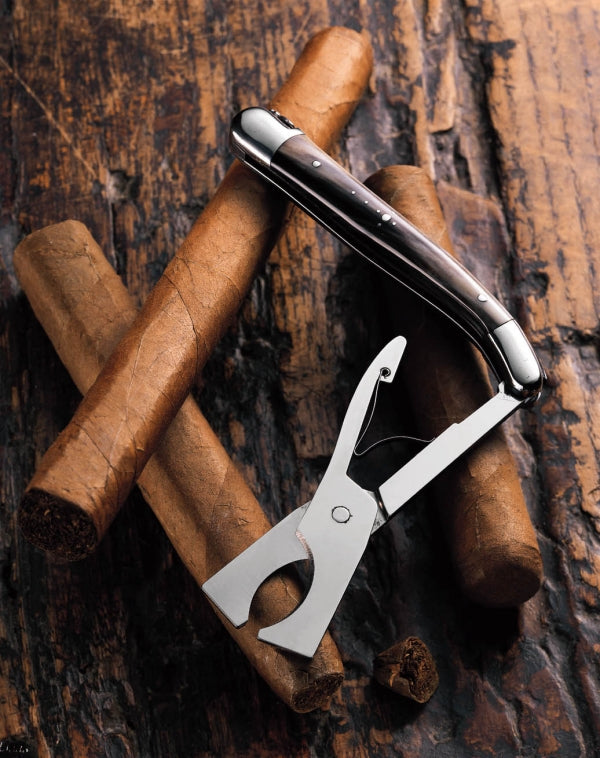

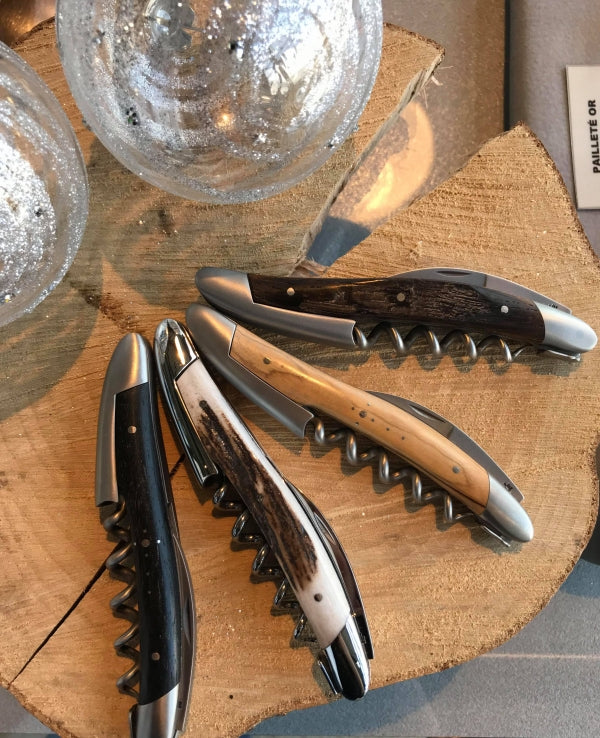
While we rarely try to talk our customers out of a purchase, we must make a firm exception when it comes to handle materials. If you are investing in a Laguiole pocket knife that you plan to keep for a lifetime, please do not purchase one with a pressed-horn handle. Regardless of where you shop, it is crucial to ensure your knife is crafted from genuine Horn Tip. Here is why the distinction matters.
⚠️ The Laguiole Imports Standard:
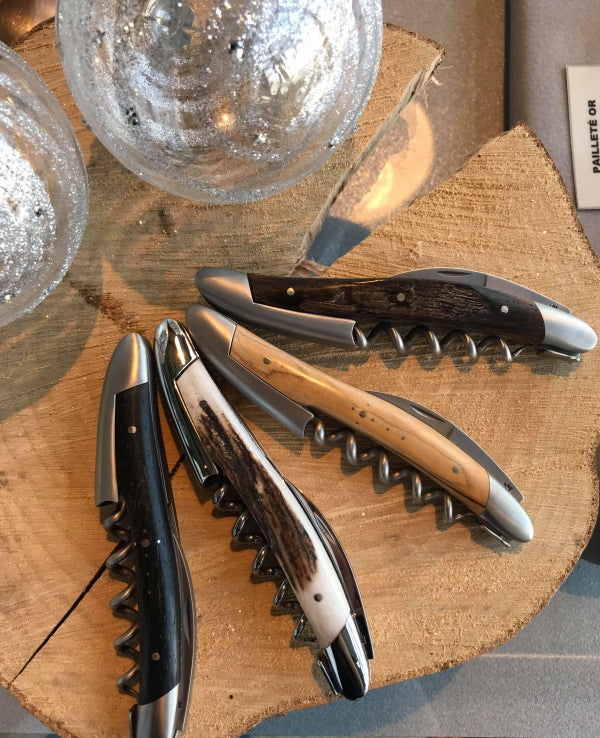
We completely refuse to retail any Laguiole corkscrews, pocket knives, or steak knives made from pressed horn. Every horn-handled piece we fulfill and ship from our Jacksonville warehouse is guaranteed to be genuine, solid Horn Tip.
To understand the issue with pressed horn, you have to look at the material's natural anatomy. Only the massive, noble last 4 to 5 inches of a cattle horn (the "tip") are solid all the way through, much like a dense piece of wood. The rest of the horn is completely hollow.
To salvage and use that cheaper hollow section, manufacturers must cut it in half, steam it at extreme temperatures, and forcefully flatten it. The fatal flaw in this process is that natural horn retains "shape memory." Over time, a pressed horn handle will inevitably try to warp back into its original, rounded shape. This creates ugly gaps where the handle plates pull away from the metal bolsters, compromising the knife's structural integrity. Pressed horn is inexpensive to produce, which is exactly why it is so commonly found on bargain and mass-produced Laguiole knives.
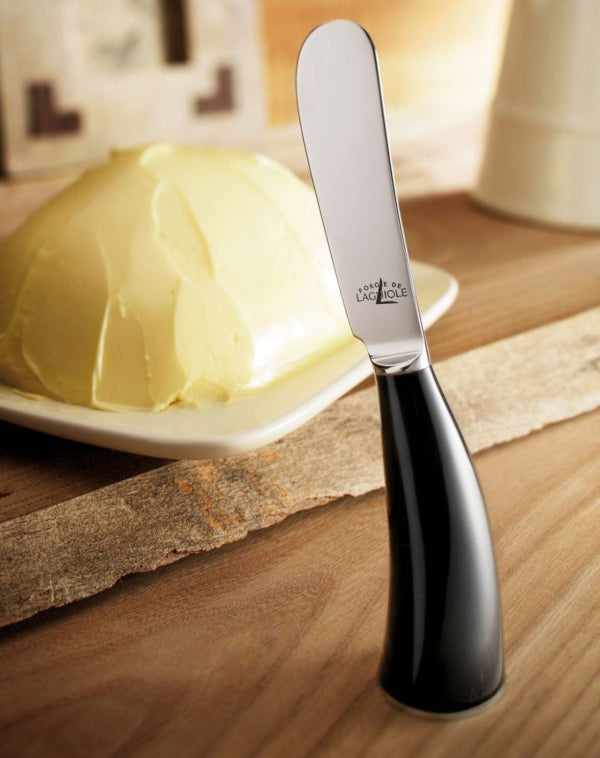
Horn Tip handles are carved exclusively from the solid, dense end of the horn. Small bars are cut from the tip and then shaped directly onto the handle without undergoing any destructive heating or compression constraints. Because it is the toughest, densest part of the material, it remains completely stable over decades of daily use.
Horn tip is a scarce and premium resource—typically, only two high-quality knives can be yielded from a single horn. This is precisely why France's most renowned master cutlers, such as Forge de Laguiole and Gille's Fontenille Pataud, categorically refuse to work with pressed horn. They prioritize generational excellence and their own prestigious reputations over making a quick sale with inferior materials.

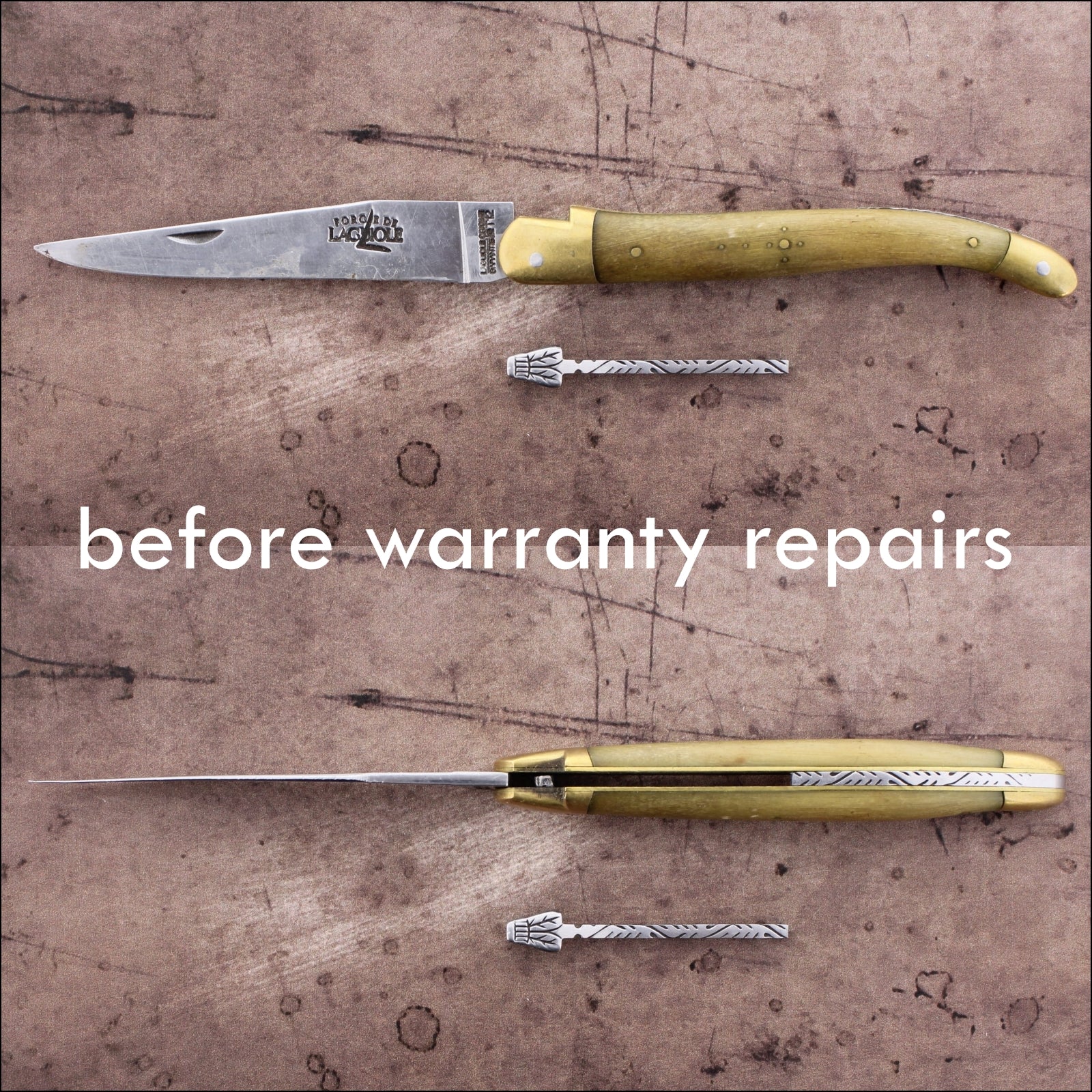
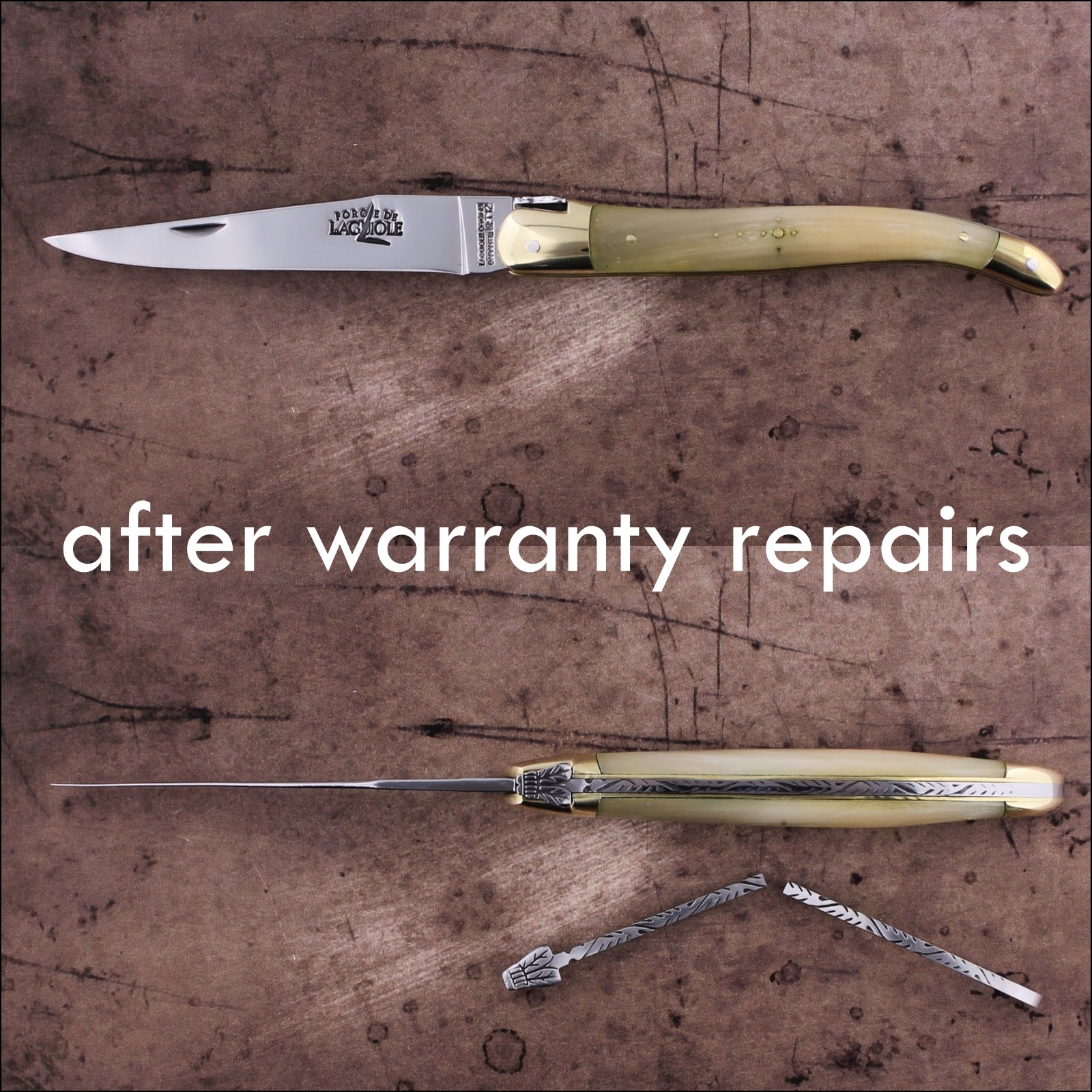
Experience seamless, U.S.-based support for your authentic Laguiole. When warranty repairs are needed, our dedicated team coordinates the entire process directly with the manufacturer in France. Choose a full, complimentary restoration to return your piece to its original elegance, or request mechanical-only repairs to preserve its unique, hard-earned patina. Enjoy unmatched expertise and dedication you won't find anywhere else.
Visit our Repair & Warranty Support.
Experience seamless, U.S.-based support for your authentic Laguiole. When warranty repairs are needed, our dedicated team coordinates the entire process directly with the manufacturer in France. Choose a full, complimentary restoration to return your piece to its original elegance, or request mechanical-only repairs to preserve its unique, hard-earned patina. Enjoy unmatched expertise and dedication you won't find anywhere else.
Visit our Repair & Warranty Support.