



Caring for Your Investment: The Essential Guide to Cleaning Laguiole Steak Knives
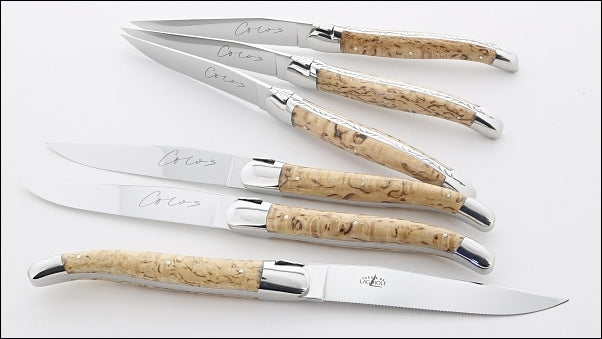
A set of genuine Laguiole steak knives is more than just cutlery; it is an investment in French heritage and a testament to fine craftsmanship. Whether your handles are made of rare woods, horn, or modern composites, the way you maintain them determines whether they will last for a few years or for several decades.
To ensure your knives remain as stunning and sharp as the day they arrived from France, follow these essential care guidelines.

1. Hand Wash Only: The Golden Rule
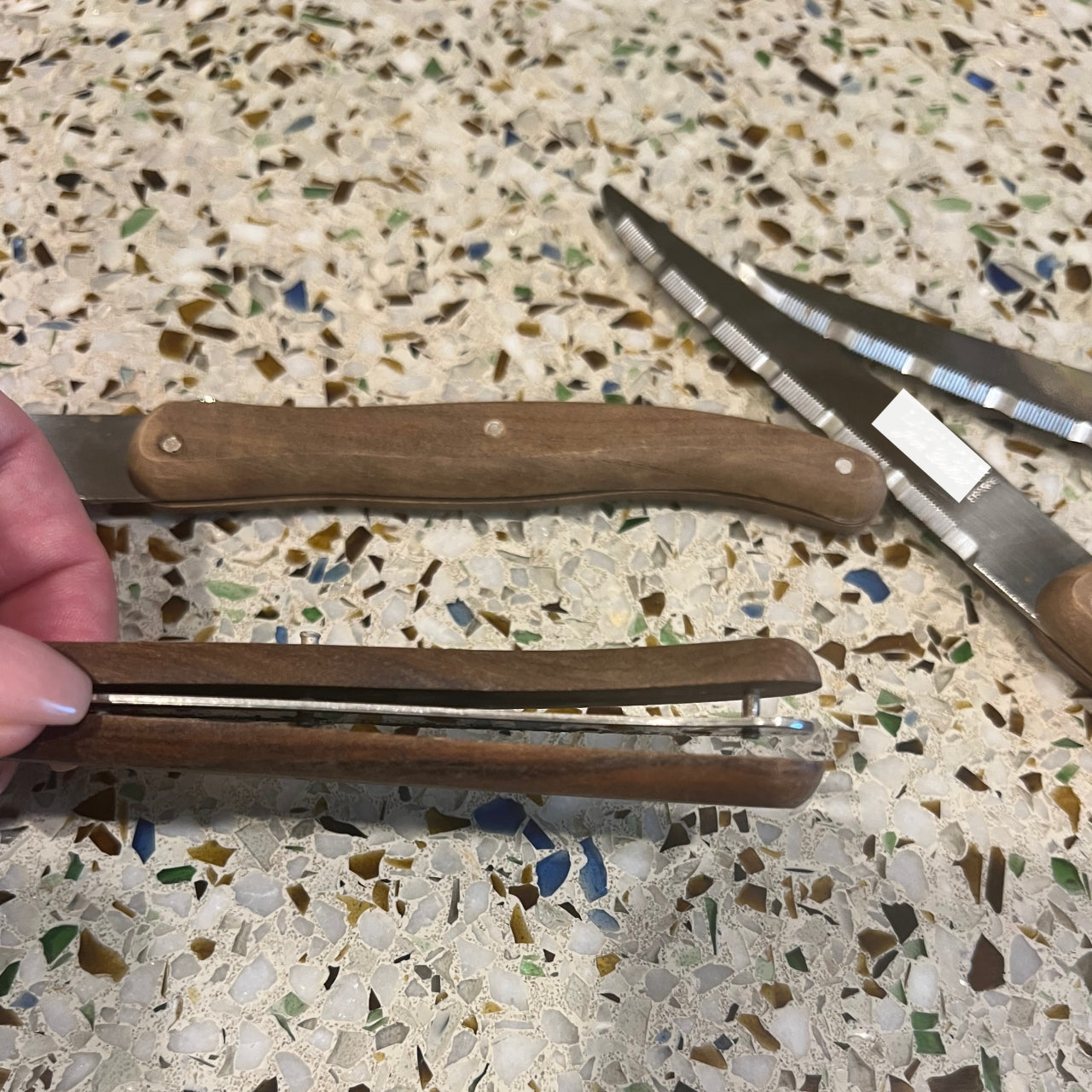
While some modern Laguiole knives are labeled "dishwasher safe," we strongly recommend avoiding the dishwasher entirely. The high heat and aggressive water pressure can loosen the rivets, but the real danger lies in the harsh chemical detergents. Over time, these chemicals strip the natural oils from wood handles and dull the finish of horn and bone, leaving them looking parched and brittle.
2. Gentle Cleansing
When it’s time to clean up after a meal, keep it simple:
- Use Mild Detergents: A standard, gentle dish soap is all you need. Avoid "power wash" sprays or heavy-duty degreasers.
- Never Soak: You should never submerge your knives in a sink full of water. Prolonged exposure to moisture can cause handle materials to swell or crack and may eventually lead to corrosion near the tang, even with high-quality stainless steel.
3. Protect the Finish
The mirror-polished or brushed finish of a Laguiole blade is delicate.
- Avoid Abrasives: Never use coarse sponges, steel wool, or Brillo pads. These are far too aggressive for high-end cutlery.
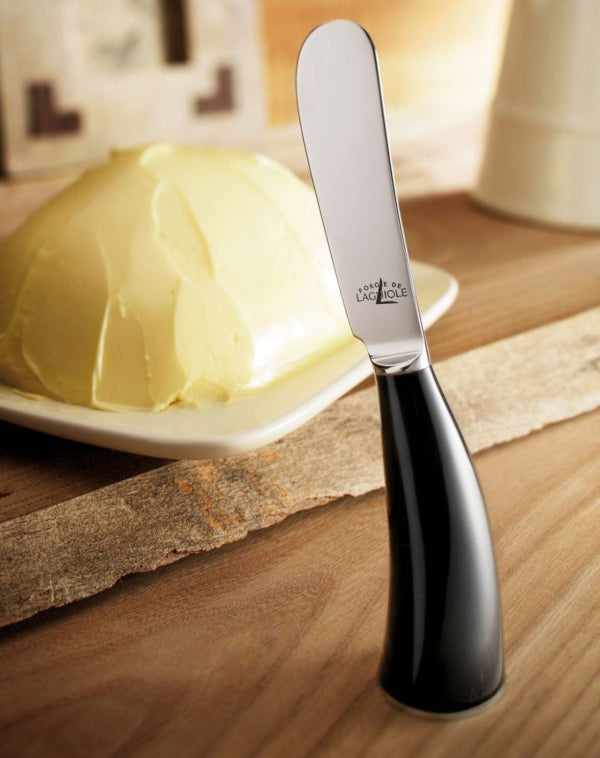
- Save the Logo: Using abrasive pads will scratch the metal and, over time, can actually wear away the iconic branding and the intricate "bee" detailing on the spring. Always use a soft cloth or the soft side of a sponge.
4. Dry Immediately
Oxidation is the enemy of any fine blade. It is best to hand dry your knives immediately after washing. Use a soft, lint-free towel to remove all moisture from the blade, the handle, and the space between the scales. This prevents water spots and ensures that no moisture is trapped against the handle material.
Pro-Tip: Handle Maintenance
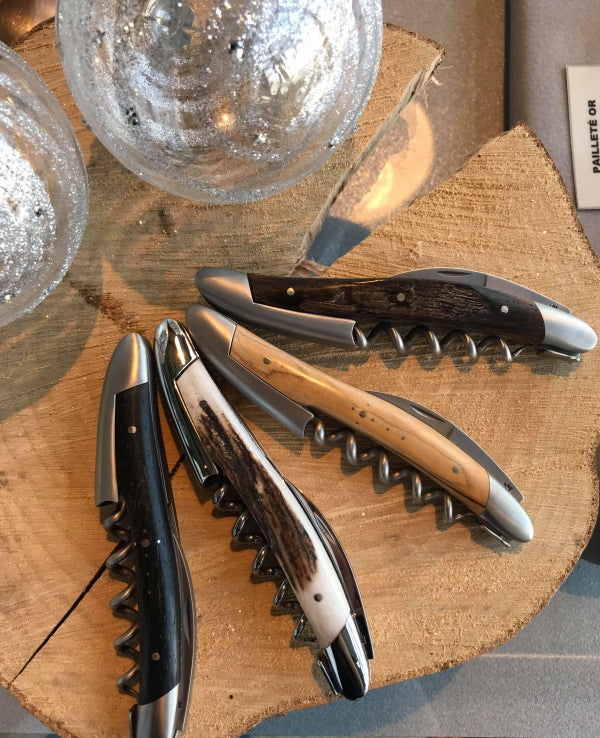
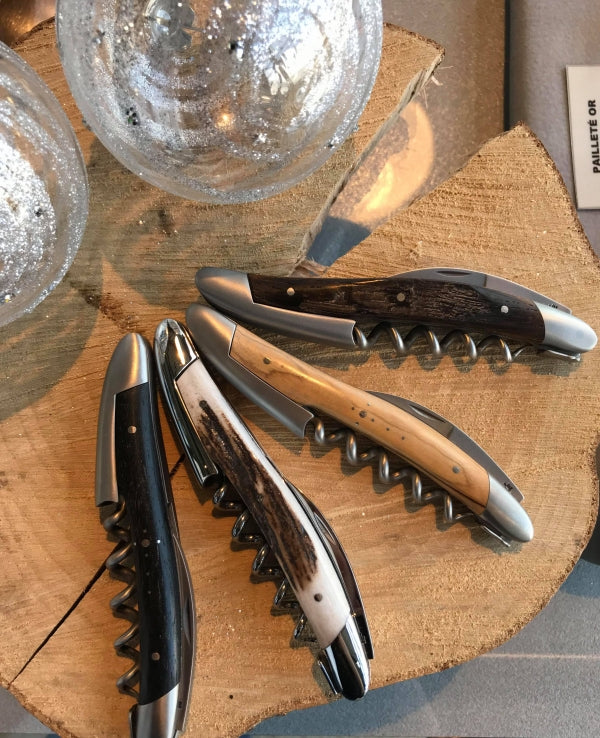
If your knives feature natural wood handles (like Olivewood, Ebony, or Juniper), they will benefit from the occasional "spa day." Once or twice a year, apply a small amount of food-grade mineral oil to the handles with a soft cloth. This keeps the wood hydrated and brings out the richness of the grain.