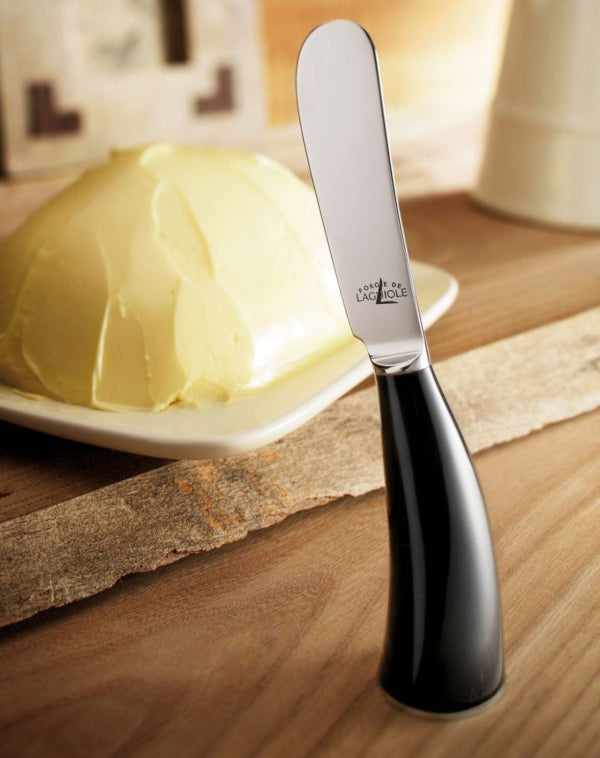
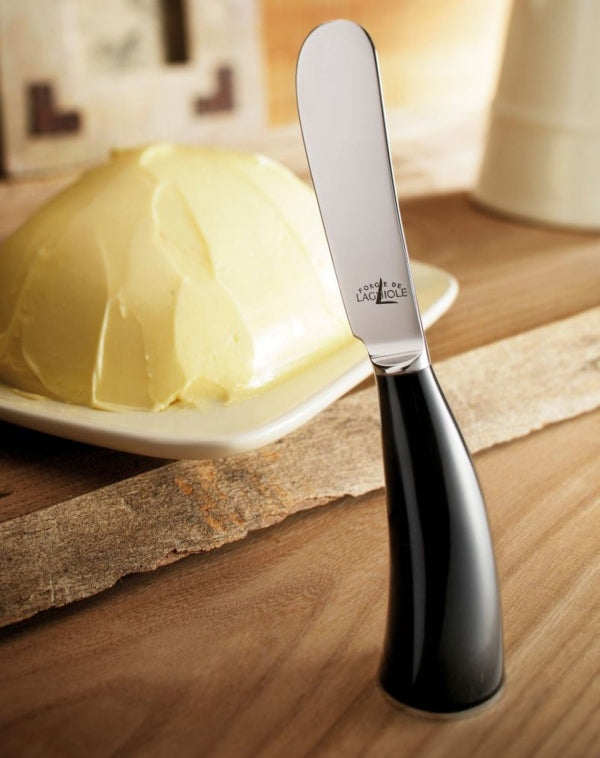
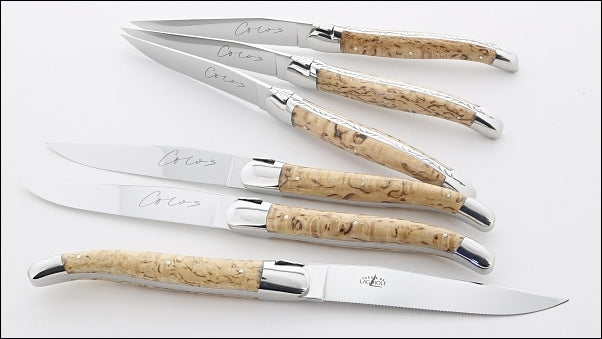
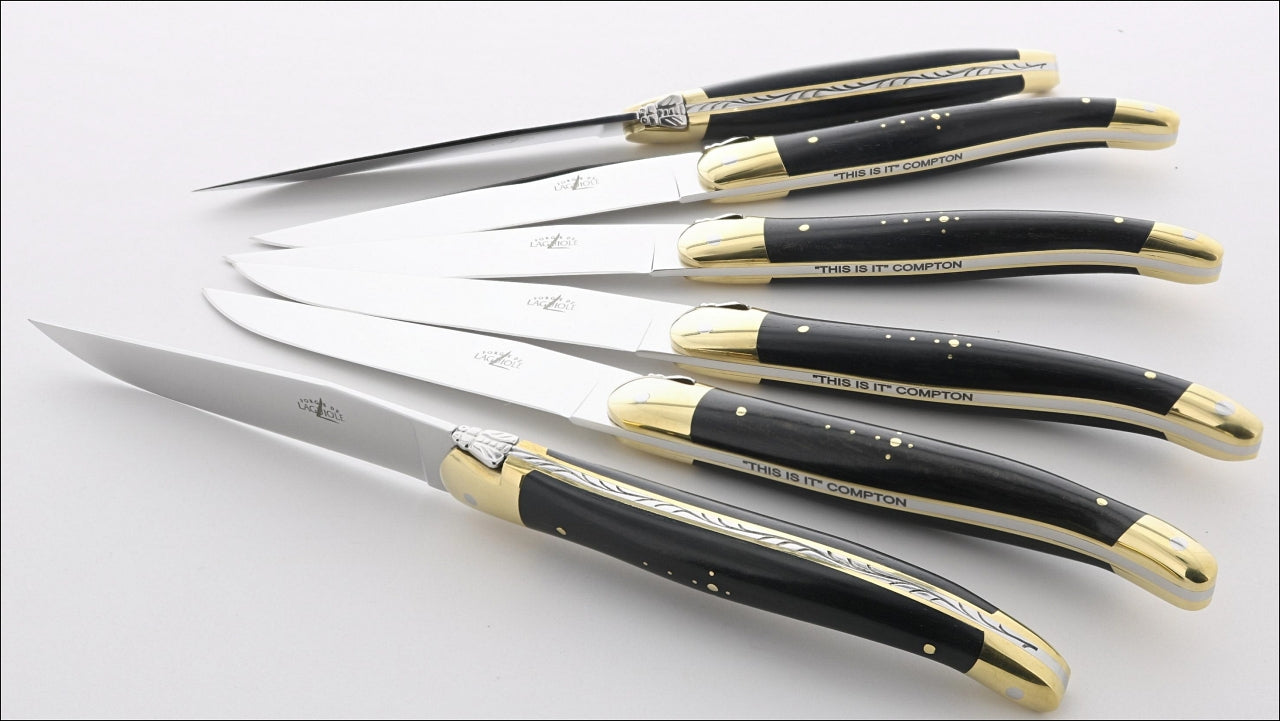
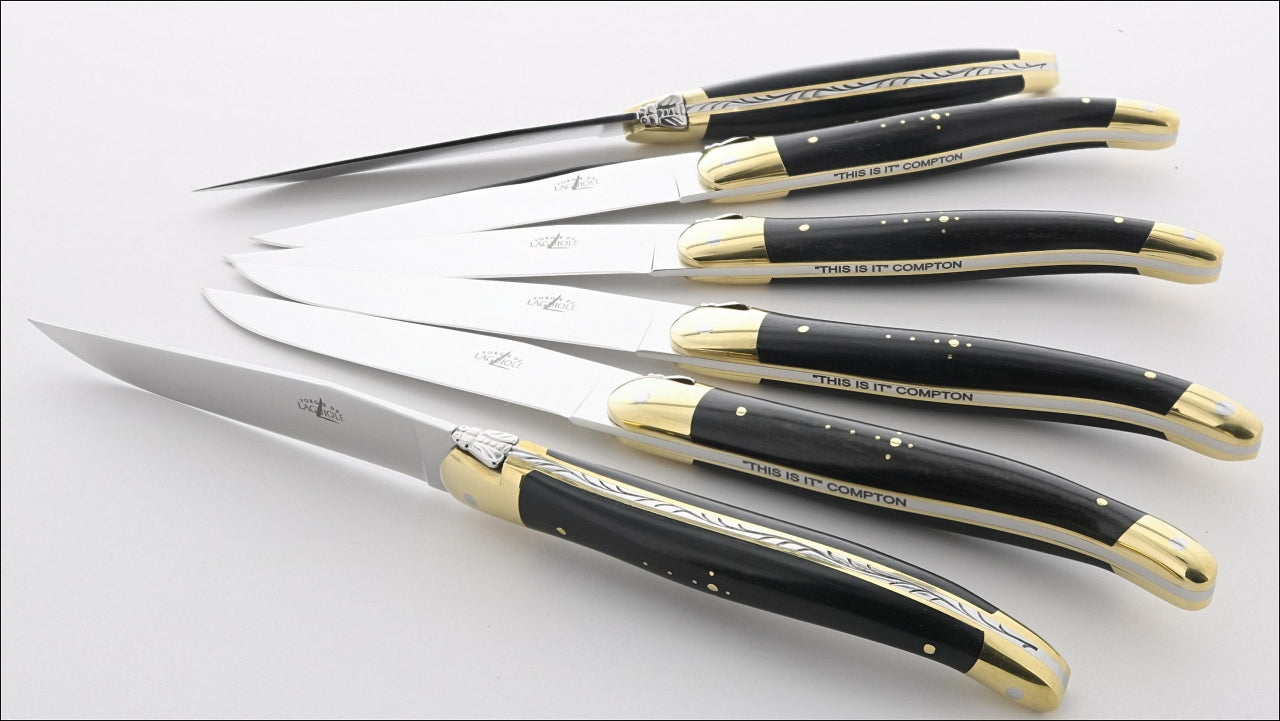
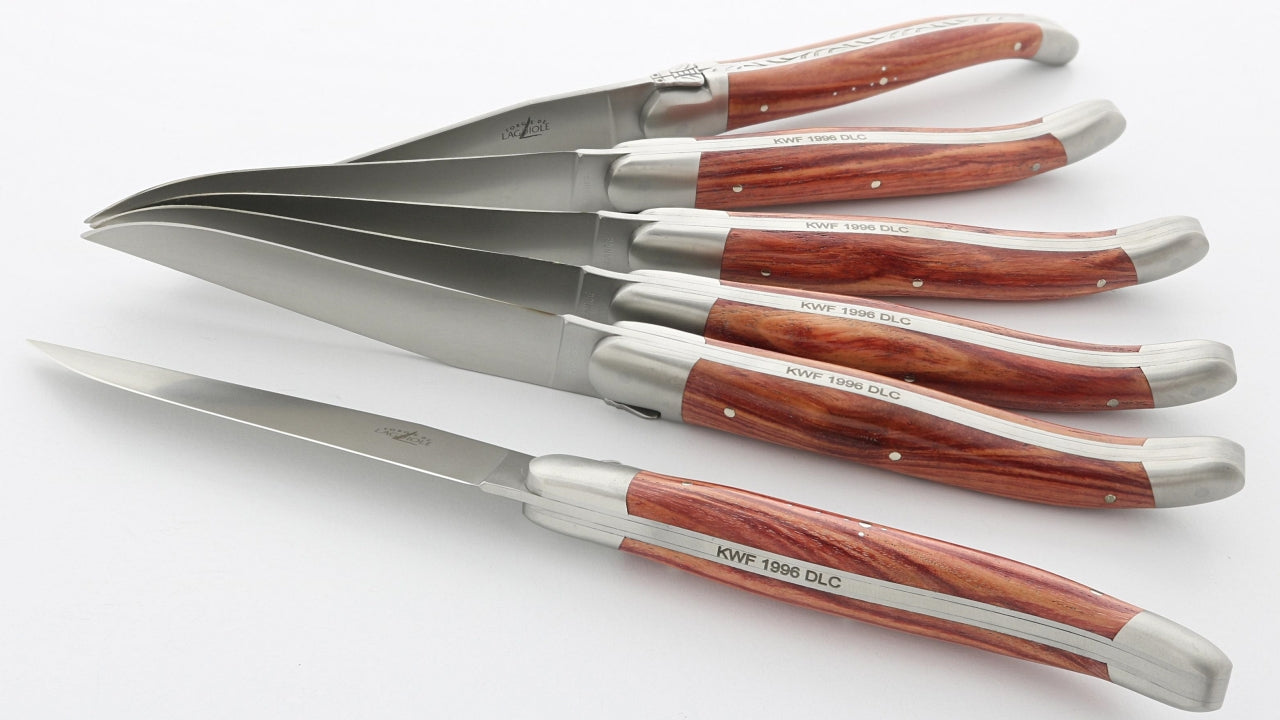
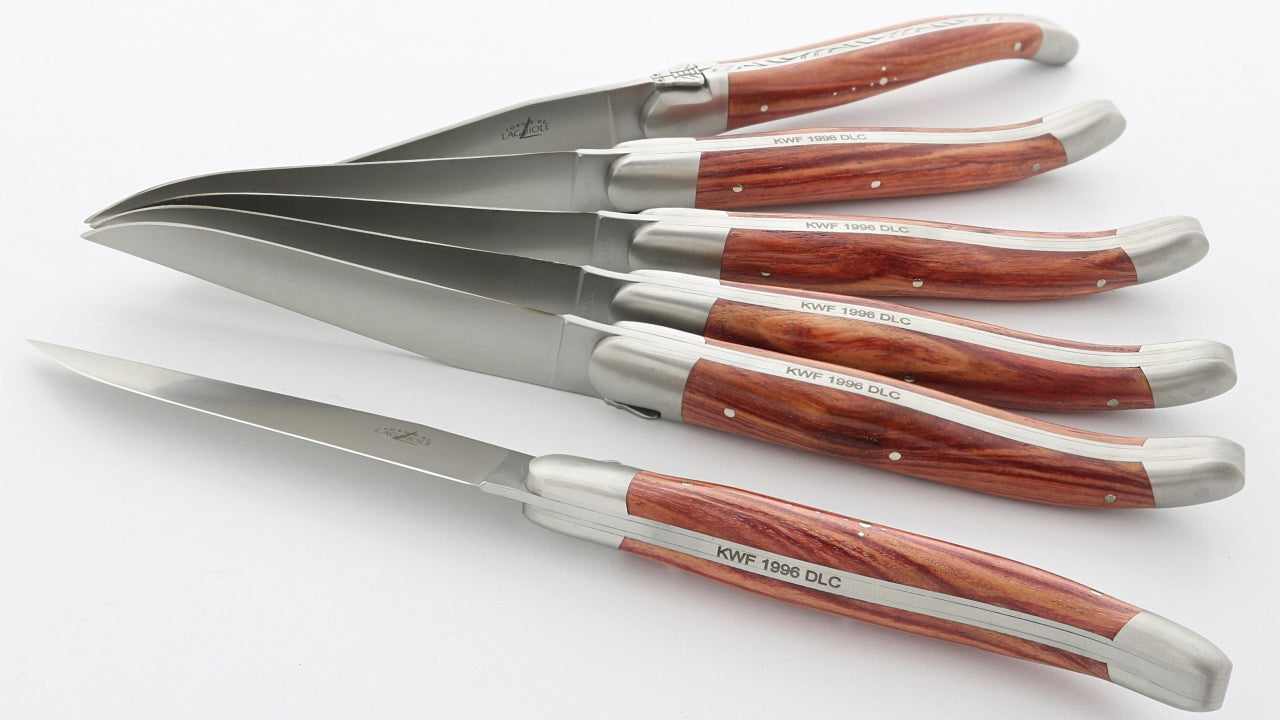
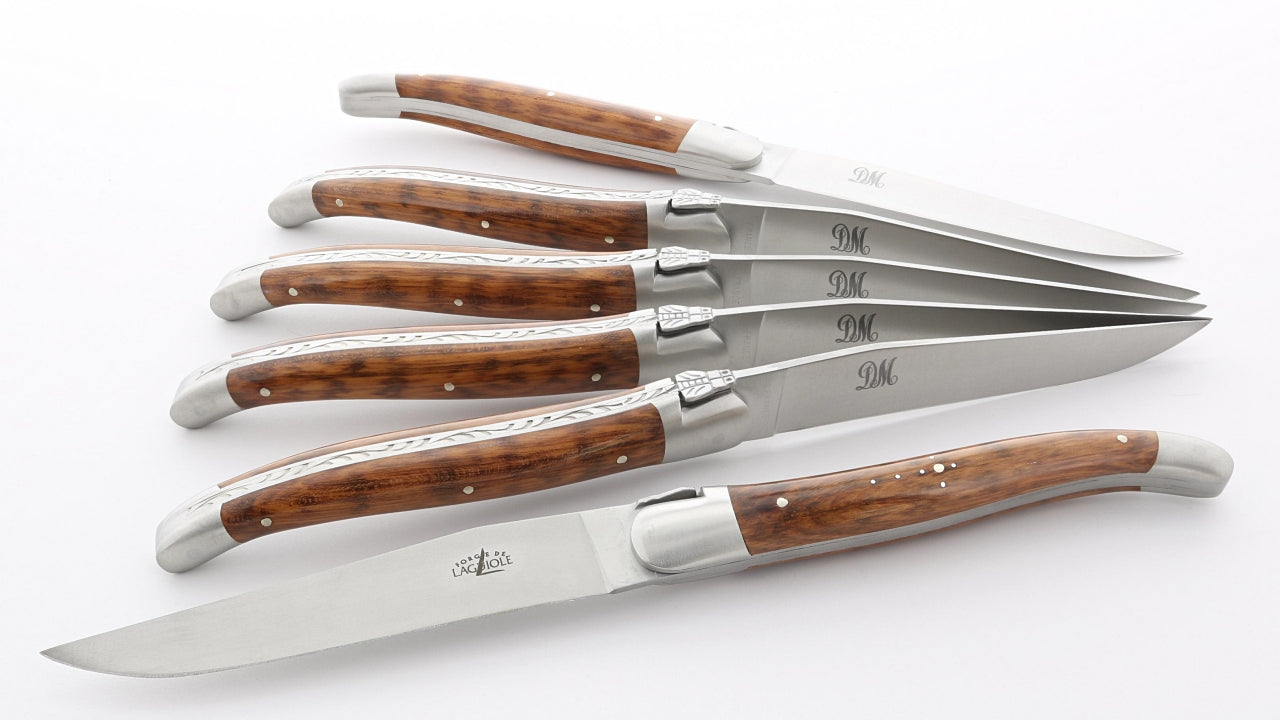
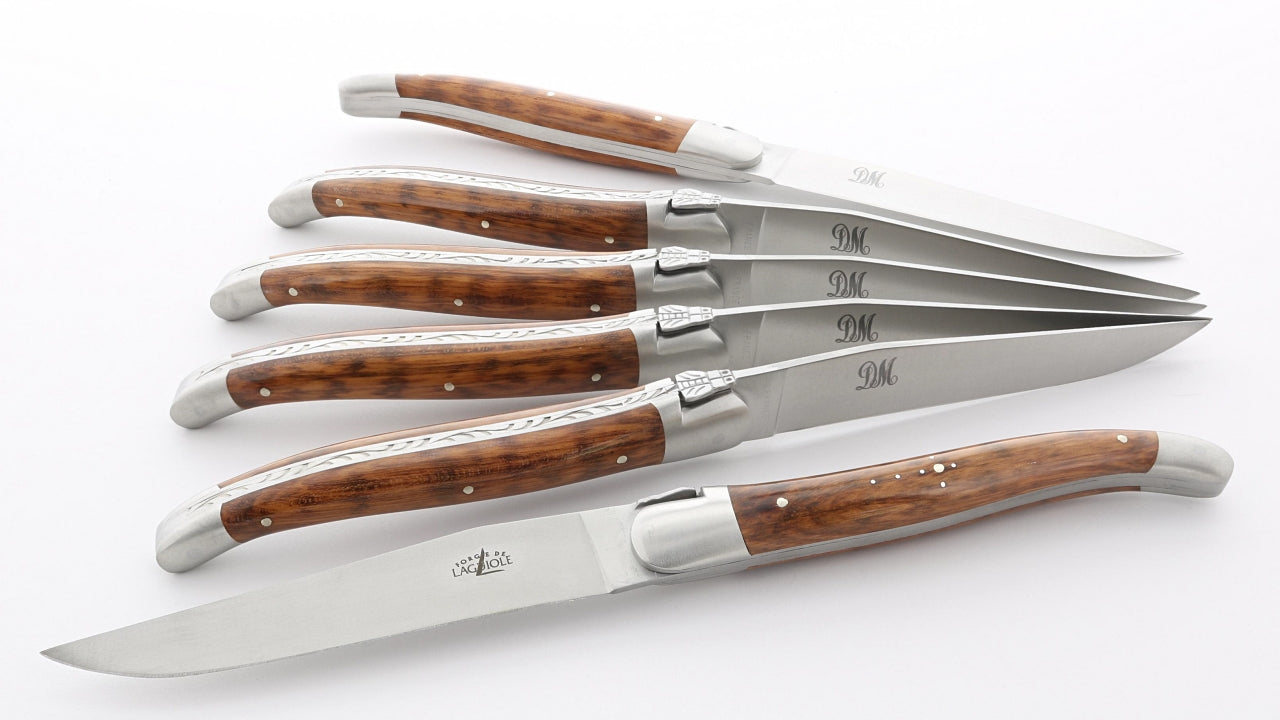
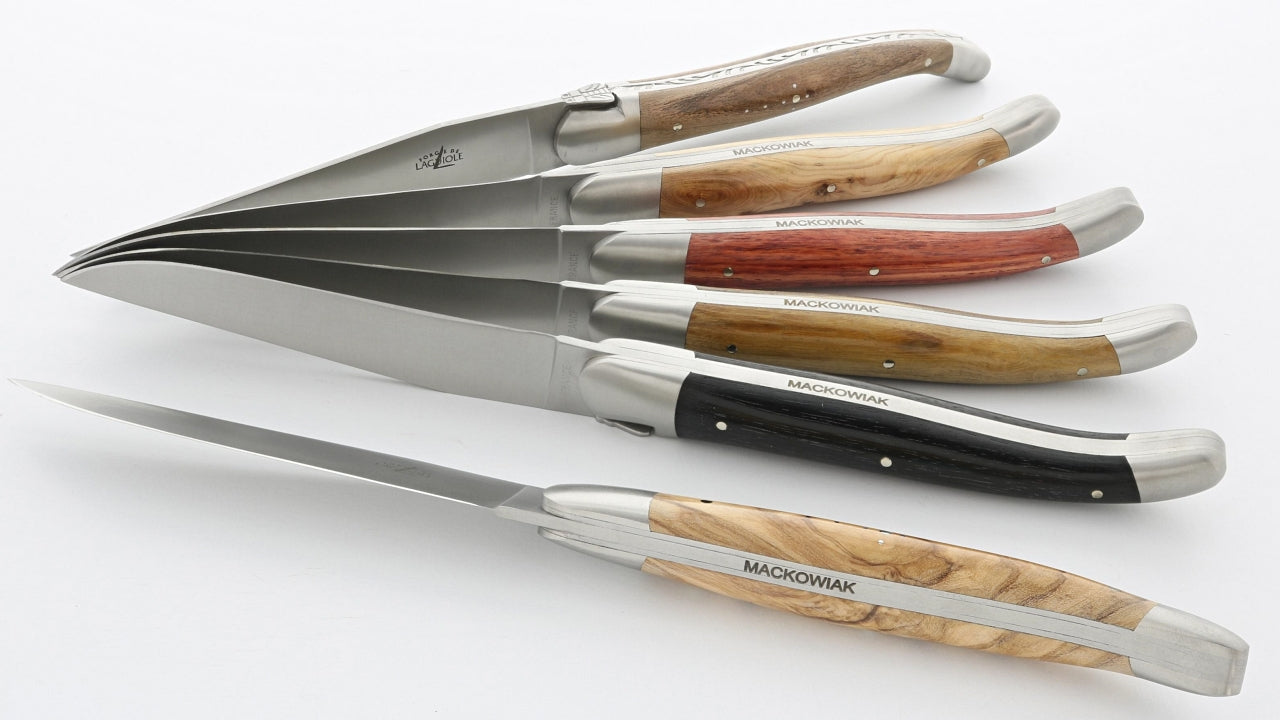
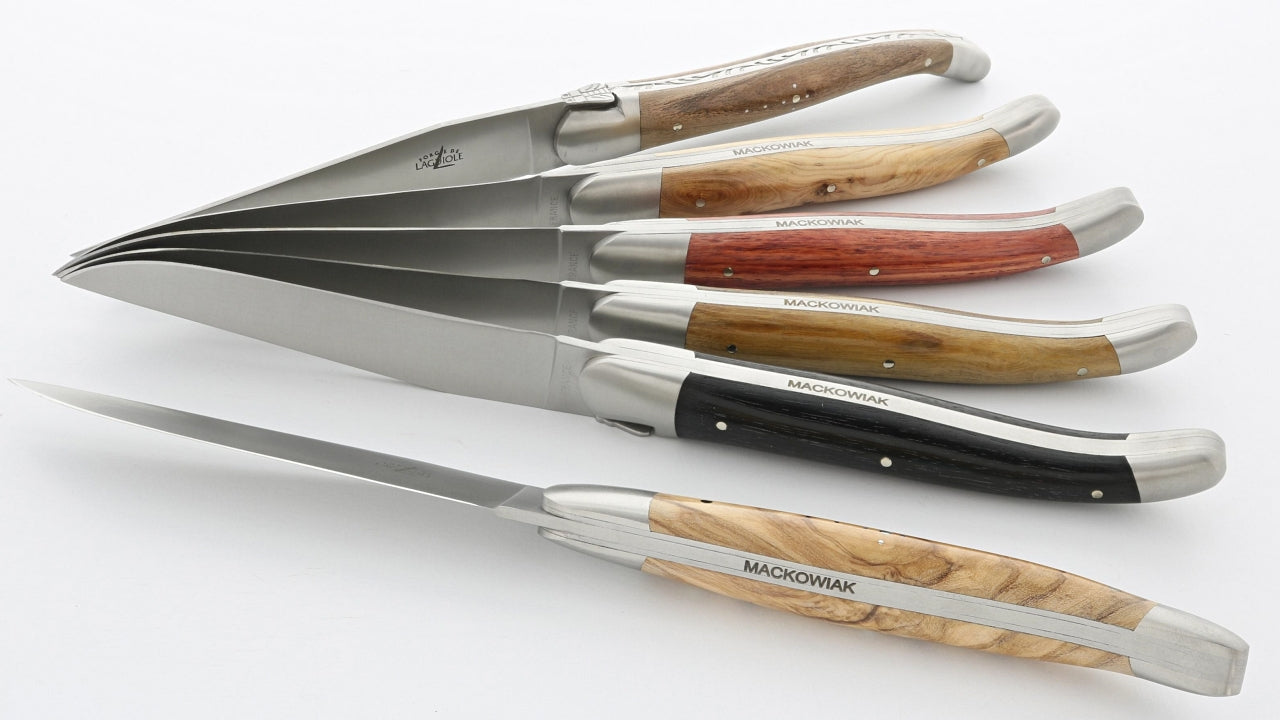
The Original Forge de Laguiole steak knives are used by the greatest Chefs worldwide, including those at dozens of Michelin-starred restaurants. High-end steak knives are never serrated; one should not feel the need to "saw" a steak.
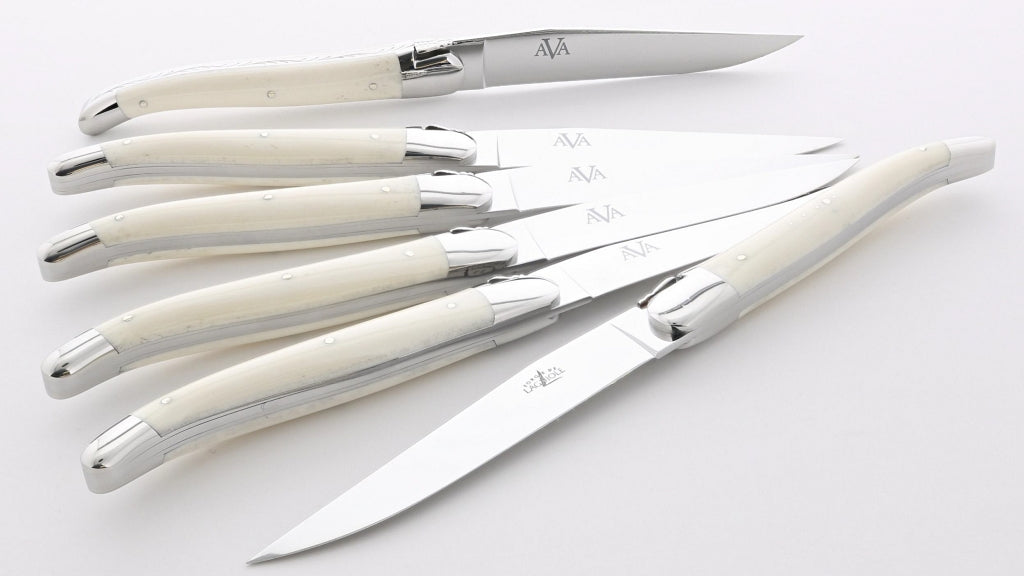
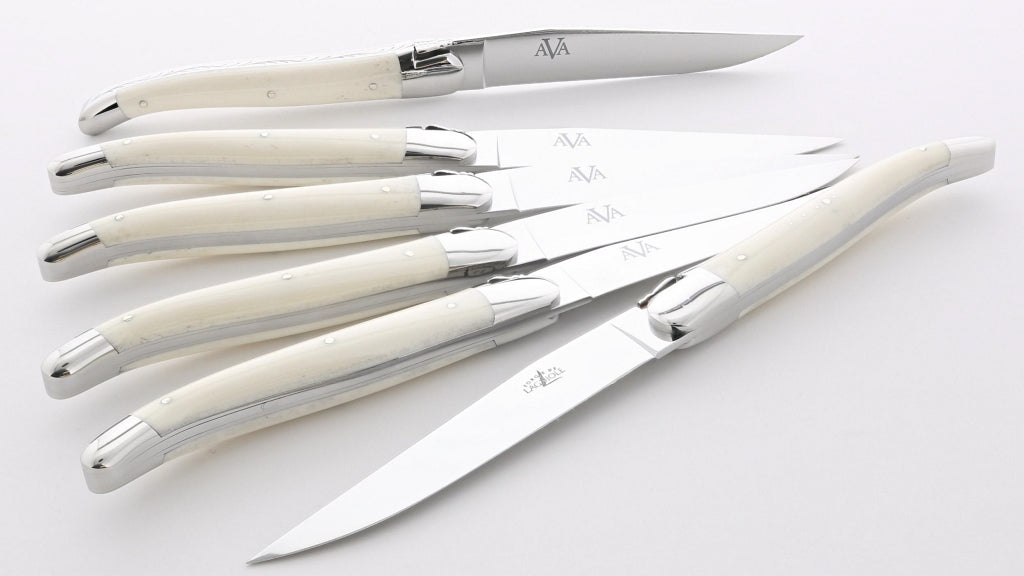
The handles are made from modern, highly durable White Compressed Cotton Fabric, a revolutionary composite material.
Layers of premium cotton fabric are infused with specialty resin and compressed under immense pressure and heat. This process creates a handle that is exceptionally strong, lightweight, and completely non-porous. This innovative material offers a striking, clean monochromatic aesthetic that is both contemporary and timeless. It is smooth to the touch and resistant to moisture and temperature changes, ensuring your set remains pristine for years of elevated dining.
**Please note that this white may have a very slightly muted greige or lavender tone that may or may not match your pure white plates.
With their iconic Laguiole curved design, these knives are elegant and ergonomic. They combine heft with unsurpassed sharpness, making cutting a breeze!
Crafted with a flawless, mirror-polished finish, these knives offer radiant brilliance that commands attention on any table. This high-gloss stainless steel provides a luxurious, reflective appearance that highlights the iconic Laguiole curves. This sophistication is further elevated by the addition of solid brass bolsters and liners. The warm, golden hue of the brass provides a stunning contrast to the white.
Forge de Laguiole table steak knives are manufactured in the village of Laguiole and feature the iconic bumblebee and the traditional shepherd's cross on most models. Forge de Laguiole represents the pinnacle of quality in the Laguiole cutlery business. Their reputation for integrity, ethics, and innovative designs has made this small 100-employee company the "Must Have" Laguiole luxury brand ↗.
The Forge de Laguiole workshop is located in the tiny village of Laguiole, France - Pop. 1300 - where the famous style of pocket knives first appeared in the early 1800s.